
Tell us what you need and we'll follow up quickly.
$100 OFF
Any Mold Service
Assessment, remediation, or water damage drying. Applied automatically at booking. One credit per property. New work orders only. Offer ends December 31, 2026.
Claim Your $100 Credit ›Credit applied at booking, no code needed. See credit terms.
- Phones answered 24/7
- Licensed and insured
- $100 first-job credit
- No obligation
- Written scope on every job
- NY split-license compliant
- Satisfaction guarantee
Within 24 to 48 Hours: what Matters When Butternut Creek Rises
Water in a Jamesville basement rarely arrives politely. The state's Resilient NY study of Butternut Creek lists three ways flooding tends to come: snowmelt made worse by rain, short and intense storms, and long soaking events like tropical storms. Each one can push water through a foundation, up a floor drain, or under a door. Water damage drying is the work of getting that water back out of the structure before it becomes a mold problem. If it is still coming in, describe where the water entered when you request drying help.
Why the Clock Matters for Water Damage Drying
EPA guidance advises drying water damaged areas and items within 24 to 48 hours to prevent mold growth. Drywall wicks water upward, carpet pad holds it, and wood framing absorbs it slowly and releases it even more slowly. Opening a window and running a box fan seldom moves enough moisture out of a basement in a creek valley, especially in spring when the outdoor air is damp too. Professional drying uses extraction, high volume air movers, and dehumidifiers sized to the space, with readings taken to show progress.
Where the Water Came From Changes the Drying Plan
Clean water from a burst supply line can usually be dried in place. Water that came over the ground from the creek, or up through a drain during a sewer surcharge, is a different matter. Studies have identified potential overtopping of manhole covers as a flood concern. When contaminated water is involved, porous materials it touched are generally removed rather than dried, and the drying plan is built around what remains.
Water Sources and what They Mean for your Drying Plan
The source of the water shapes how the drying job is planned. A burst pipe inside the house brings clean water, which can usually be dried in place. A failed sump pump or backed-up floor drain brings water that has been in contact with soil or sewage: that water is contaminated, so materials it touched are removed rather than dried. Butternut Creek floodwater is the most challenging category because it carries sediment and debris. When floodwater enters the basement, the structural drying happens on whatever materials remain after contaminated items are removed.
You help us plan the work by telling us where the water came from. Did it come from a burst supply line upstairs, a backed-up drain, the ground, or the creek? Is the water still coming in? How long was it there before you noticed? These details shape the scope and the timeline, and they are worth careful attention when you call or fill the form.
Is it Already a Mold Problem?
Not necessarily, and on a fresh loss drying may be the only service you need. If growth is visible or a smell stays after the readings are normal, an assessment is the next step. Describe what happened at your Jamesville address and we will help you sort out which applies.
Does the Drying Record Matter for a Claim?
Coverage depends on your policy and on what caused the water, and we cannot rule on it. Drying logs and photographs taken during the job help document the loss whatever coverage you have. Read about mold assessment in Jamesville for the step that follows if mold turns up, the page on mold removal in Jamesville for the hamlet, and the guide to water in the basement for what to do while you wait.
Calling for Water Damage Drying in Jamesville
When water is still coming in, call (315) 640-3590, where phones are answered 24/7. Tell us where the water entered, whether it came from a pipe, the ground, or a drain, and roughly how much of the floor is wet. If it is safe to do so, shut off the water supply or the power to the flooded area, and move what you can off the floor. Licensed and insured companies carry out the drying, and your first job qualifies for a $100 credit applied at booking, one per property, on new work orders. The form asks how soon you need help, your contact details and the property address, and a person follows up from there.
The master plan's Jamesville study area contains 8 miles of streams, 560 acres of wetland land cover, 166 acres in frequent flooding areas and 999 residential parcels on 2,816 acres.
SourceThe Town of DeWitt established the Jamesville Sewer District in 2009 and adopted hamlet zoning and an overlay district for Jamesville in 2008.
SourceThe Town of DeWitt (covering Jamesville) has participated in the NFIP since March 22, 1974; its current effective FIRM is dated November 4, 2016; it has 82 NFIP policies in force; its Flood Damage Prevention law is Chapter 100 of the Town Code.
SourceThe Water Damage Drying Process for Jamesville Homes
Extraction and Setup
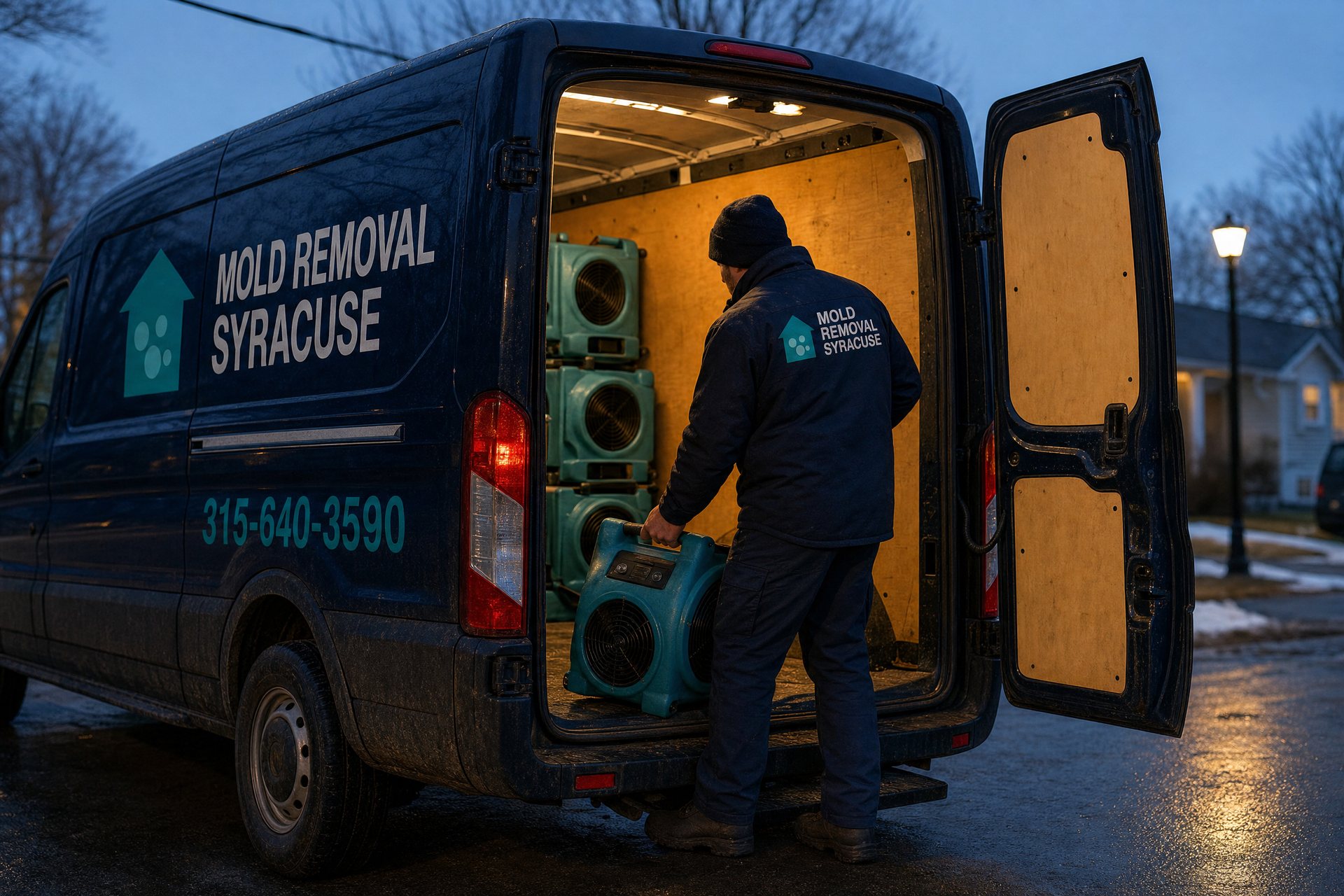
Drying starts by removing standing water with extraction equipment, because evaporating water that could have been pumped out wastes time. Wet carpet pad, saturated cardboard storage, and anything else that cannot be dried is moved out of the way. Air movers are then placed to push air across wet surfaces, and dehumidifiers pull that moisture out of the air. The equipment is arranged around the room's layout, the materials involved, and how much water each surface holds.

Measuring, Logging, and Knowing When It Is Dry
A basement can look dry and still have wet framing. Moisture meters measure the water content of drywall, wood, and concrete. Readings are logged at the same spots on each visit so the trend is clear. Equipment stays until the materials reach a dry standard, compared against unaffected areas of the same house.
EPA guidance recommends that indoor humidity stay below 60 percent, ideally between 30 and 50 percent, to prevent mold growth. In Jamesville, the outdoor air stays damp for months. That is why professional dehumidifiers matter: they maintain humidity levels during and after drying. A box fan cannot do this work alone.
Your drying log is proof of the work. It shows readings at each spot and when the materials reached a dry standard. Keep it, because you will want it if a future mold inspection happens or if you file an insurance claim.
Finished Basements and Older Foundations
Much of Jamesville was built before 1950. In those homes, a finished basement may sit over a stone or block foundation that was never meant to be covered. Paneling and drywall trap water against the wall, so drying often means removing the bottom of the wall finish or drilling small holes to move air into the cavity.
Older foundations are narrower than modern ones. Water reaches a broader portion of the framing, and stone footings wick water upward much faster than poured concrete. These homes compound the timing problem: EPA guidance calls for drying within 24 to 48 hours, but a stone foundation in a wet spring adds moisture from outside as your crew removes it from inside.
Climate matters here. When the outdoor air is 85 percent humidity in May, an open window does nothing. Professional dehumidification pulls moisture out steadily. Readings at the same spots across visits show the materials drying down toward the dry standard.
Flood Maps and Jamesville Questions: Insurance, Mold and the Drying Record
The Town of DeWitt, which covers Jamesville, has participated in the National Flood Insurance Program since 1974, and its current effective flood insurance rate map is dated November 4, 2016. According to the county hazard mitigation annex, the Town of DeWitt has 82 NFIP policies in force, with 46 claims paid totaling $4.466 million. If your Jamesville address is in a mapped flood zone, insurance and rebuild planning are shaped by that designation. Drying logs and photographs taken during the job help document the loss whatever coverage you have, and having them together makes any insurance claim simpler to process.
What Butternut Creek Can Do
Butternut Creek moves water and sediment in the spring and summer. The region averages 94.9 inches of snow from December through February, followed by 22.9 inches from March through May. That spring combination of snowmelt and rain creates predictable peak flows. The creek runs high when those forces combine.
The state's Resilient NY study modeled flood risk in the reach between the CSX railroad crossing and Kinne Road. DeWitt's hazard mitigation plan identifies the creek and its floodplain as an ongoing risk for homes on the north side of Jamesville. The Town of DeWitt has 82 NFIP policies in force, with 46 claims paid totaling 4.466 million dollars, which shows the risk is real and recurring.
When the creek runs high it carries both water and soil. Floodwater is contaminated, so porous materials it touches are usually removed rather than dried. Drying and sediment removal take longer than a plumbing leak. Foundation seepage and overtopping are distinct failure modes: the plan notes potential overtopping of manhole covers as a documented concern. Knowing what touched your basement matters because it determines whether materials can be dried or must be removed.
Drying Timeline and what to Expect at your Jamesville Home
A typical water damage drying job in Jamesville takes one to three weeks, depending on what materials are wet and how much water is involved. The crew removes standing water on day one. Equipment runs for days two through seven or more, with readings taken each visit. The frequency of visits increases early and decreases as the moisture content drops. Your cost depends on the scope: a small basement leak may require one or two days of equipment rental, while a Butternut Creek flood in a stone foundation may require two weeks of intensive drying.
Is a Box Fan Enough?
Fans move air, but dehumidifiers sized to the space and readings taken at the same spots are what show the materials reached a dry standard. In spring the outdoor air is damp too, which is one reason an open window does not settle it. A basement that looks dry can still have wet framing. Professional drying is different because it is measured and recorded.
Related Drying Words Jamesville Owners See on a Work Log
You might search for water damage restoration, water removal, water extraction, flood cleanup, or basement flood drying. All of these lead to the same first steps. Structural drying is the trade term for drying the building itself, as opposed to just mopping the floor. Emergency water removal is common phrasing too, though the quality of the drying is what counts.
Equipment terms include wet vacuums, truck mounted and portable extractors, air movers, low grain refrigerant dehumidifiers, and desiccant dehumidifiers. Moisture meters, hygrometers, and thermal cameras measure the progress. Drying logs and psychrometric readings, which track temperature and humidity together, show whether the air is actually pulling water from the materials. Injection drying systems push air into wall cavities and under cabinets without removing finishes.
Source terms matter as well. A sump pump failure, a backed up floor drain, a burst pipe, a water heater leak, an ice dam, and groundwater seepage each start a different kind of job. Clean water, gray water, and black water are the industry categories, and sewer backup or floodwater from Butternut Creek falls into the last group. Hydrostatic pressure, the push of saturated soil against a foundation, explains why some basements leak even when the sky is clear.
Related services follow drying when needed. Mold assessment documents any growth that appeared before the water was caught, and mold remediation removes it under a written plan. Syracuse Mold Removal arranges water damage drying for Jamesville and for nearby DeWitt, East Syracuse, Fayetteville, and Manlius properties. Insurance claim documentation, contents moving, and rebuild planning are other parts of the same recovery.
Timing and documentation terms come up too. Drying time, drying goals, dry standard, and moisture mapping describe how progress is judged, while loss photos, an equipment log, and a moisture log describe how it is recorded. Flood insurance, homeowners insurance, and sewer backup coverage are separate questions, and the records from a Jamesville drying job help with whichever one applies. Basement waterproofing, sump pump installation, and backwater valves are related services that people often consider once the drying is finished.
Frequently Asked Questions
Real questions from Syracuse homeowners and landlords. Answers from EPA guidance and New York State law.
What should I do first for water damage drying in Jamesville with Syracuse Mold Removal?
Call Syracuse Mold Removal at (315) 640-3590, where phones are answered 24/7, and describe where the water came in and how much is wet. If it is safe, stop the water source and lift belongings off the floor. Water damage drying in Jamesville then starts with extraction and moisture readings.
Is water damage drying different after a Butternut Creek flood in Jamesville, according to Syracuse Mold Removal?
Yes. Floodwater and sewer backup count as contaminated, so porous materials they touched are usually removed before water damage drying continues on what remains. Syracuse Mold Removal plans the Jamesville job around where the water came from.
How does Syracuse Mold Removal know when water damage drying is finished in Jamesville?
Moisture readings are logged at the same spots on each visit and compared with dry areas of the same Jamesville house. Water damage drying is finished when materials reach that dry standard, and Syracuse Mold Removal can share the log for insurance or a later mold assessment.
Related Services in Jamesville
What to Expect for Water Damage Drying in Jamesville
You call once and we take it from there. We arrange a licensed, insured professional for water damage drying at your Jamesville property and guarantee the experience through your on-site inspection.
- Licensed, insured professionals, arranged by us
- Phones answered around the clock
- Family owned
- Call or send the form about your Jamesville property.
- We arrange a licensed, insured professional.
- They inspect on site, then you decide.